


특별강연
How to Design High Performant Concrete with Multiple Performance Requirements
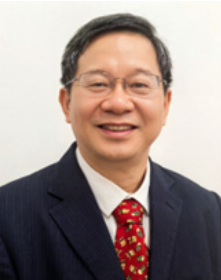
Yail Jimmy Kim
-
Caijun Shi, Ph.D., P. Eng., FCAE, FACI, FRILEM, FACF, FHKCI
International Member, Chinese Academy of Engineering
President, Asian Concrete Federation, www.asianconcretefederation.org
Editor-in-Chief, Journal of Sustainable Cement-based Materials (IF=4.2, Q1) -
Chair Professor and Director
Key Laboratory of Building Safety and Energy Efficiency of the Ministry of Education of China -
Affiliated Professor, Department of Civil Engineering
The University of British Columbia, Vancouver BC V6T 1Z4, Canada
Speaker bio
Caijun Shi Ph.D., P. Eng., FCAE, FACI, FRILEM, FACFDr. Caijun Shi is the President of Asian Concrete Federation (ACF), Chair Professor of Hunan University, founding Editor-in-Chief of “Journal of Sustainable Cement-based Materials” and editorial board member of CCR, CCC, CBM, JBE, etc.
His research interests include characterization and utilization of industrial by-products and waste materials, carbon mineralization for cement and concrete, and design and production of high/ultra-high performance concrete. He has been granted more than 50 Chinese and US patents, and many of which have been used in large construction projects or product manufacture worldwide.
He has authored/co-authored more than 750 technical papers. His Google scholar citation is over 80,000 and H-index of 147. He ranks No. 1 for year 2024 & 2025 and No.2 for career (1969-2025) in global Building and Construction Sector based on Stanford University’s ranking. He was elected as a fellow of International Energy Foundation in 2001, American Concrete Institute in 2007, RILEM in 2016, Hongkong Concrete Institute in 2022, ACF in 2023 and Canadian Academy of Engineering in 2025; International Member of Chinese Academy of Engineering in 2025.
Abstract
A novel method for mixture design of high performance concrete with multiple performance requirements is presented, which consists of the following steps:
(1) close packing of combined fine and coarse
aggregates, and its voids content for paste to fill;
(2) determination of
water-to-binder ratio using the lowest one between the Bolomey's
equation calculation and the durability requirements;
(3) design of
ternary or quaternary binder composition using simplex centroid design
method then establishment of its relationships with the microstructural
parameters or properties of the concrete;
(4) calculation of the lowest
excessive paste thickness (or the binder content) ;
(5) adjustment of
yield stress and viscosity of concrete by addition of the proper dosage
of superplasticizer and/or viscosity modifying agent;
(6) stacking of
contour curves from the relationships between binder composition and
the microstructural parameters or properties of the concrete, and
acquirement of desired range of binder composition meeting the
requirements for different properties of concrete.
In addition, this method can also be used to predict the performances of concrete with different compositions of cementitious materials.
Finally, the applications of this novel mixture design method for several large construction projects and ready-mixed concrete plants are introduced.
